Showing posts with label Photo Workshop. Show all posts
Kutch | Some Photographs
The colours of Kutch in Gujarat are simply spectacular - here are some photographs from the villages in Kutch.
Labels:
kutch,
photo awards,
Photo Workshop,
photography,
Pop Photo
Nepal Himalaya A Journey Through Time | Book Launch Kolkata
The third book launch of Nepal Himalaya | A Journey Through Time - Photographs by Sujoy Das, Text by Lisa Choegyal, Drawings by Paula Sengupta and Foreword by Reinhold Messner will be launched in Kolkata at The Harrington Street Arts Centre on Saturday 7th January 2017 at 6.30 pm. The book will be launched by Mr Meher H Mehta, former Vice President of the Himalayan Club and a senior member of the mountaineering fraternity. The launch will be preceded by a photographic presentation on the lost kingdom of Mustang.
All are welcome for this launch.
Some photographs from the book are below:
The book is available both at Amazon.com and Amazon.in.
The Indian distributors for the book are
Labels:
Everest,
Himalayas,
Nepal,
photo awards,
Photo Workshop,
photography,
Pop Photo,
Publications
Nepal Himalaya | A Journey Through Time | Book Launch New Delhi
Nepal Himalaya - A Journey Through Time will be launched in New Delhi on Sunday December 4th 2016 at the India Habitat Centre, Gulmohar Hall at 7 pm. On that occasion, a presentation through photographs titled The Lure of Everest will be made. All are welcome. The details are below:
Banff Mountain Book Festival Winners 2016

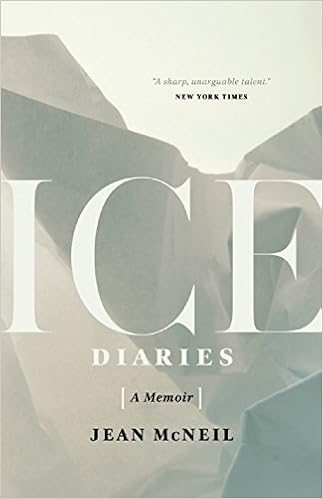
The Phyllis and Don Munday Award - Grand Prize in the 2016 Banff Mountain Book Competition has been awarded to Ice Diaries: An Antarctica Memoir, the story of author Jean McNeil's year spent on the continent of Antarctica.
The book, from publishers ECW Press, was chosen out of 147 mountain and adventure literature submissions from authors hailing from nine countries.
Written a decade ago while McNeil was the writer-in-residence with the British Antarctica Survey, Ice Diaries is part travelogue mixed with popular science and memoir.
“This thought-provoking, timely and unusual book blends adventure travel writing and creative non-fiction in a book that's thoughtful and genuine,” stated Banff Mountain Book Competition jury member Harry Vandervlist in a press release. “It’s philosophical out of necessity, because the realities of life, death and the staggering natural world of Antarctica force you to confront big questions. Putting those thoughts into memorable prose that invites re-reading is another matter, and Jean McNeil succeeds brilliantly.”
Ice Diaries was also the winner in the competition's Adventure Travel category.
The winners in the other categories are below:
Mountain Image
Yosemite in the Fifties, Dean Fidelman, Patagonia Books
Mountain Fiction and Poetry
Martin Marten: A Novel, Brian Doyle, Thomas Dunne Vooks & St. Martin's Press
Guidebook
Searching for Superman, Jeff Long, Ascent
Mountaineering History
Rock Queen, Catherine Destivelle, Hayloft Publishing Ltd.
Special Jury Mentions
Across the Arctic Ocean: Original Photographs from the Last Great Polar Journey, Sir Wally Herbert and Huy Lewis-Jones, Thames & Hudson
The Bold and Cold: A History of 25 Classic Climbs in the Canadian Rockies, Brandon Pullan, Rocky Mountain Books Ltd.
For further information please do visit https://www.banffcentre.ca/banff-mountain-book-competition
Labels:
Banff Festival 2010,
Himalayas,
mountains,
Photo Workshop
Ladakh | After Dusk
![]() |
| Campsite on the first day of the Phyang to Hundar trek |
Over the past few years in Ladakh, I have been shooting a number of locations after dusk mostly using my tripod and sometimes with long time exposure. This post showcases some of the "after dusk" images.
![]() |
| Star trails over Mount Kangyatse |
![]() |
| The Stok Kangri range and Leh town at dusk |
![]() |
| Moonlight at Hanker on the Markha valley trek |
![]() |
| Lamayuru monastery |
![]() |
| The tea tents and campsite of Nimaling For more photographs from Ladakh and Zanskar do visit For our 2017 trek in Ladakh do visit |
Labels:
Ladakh,
leh,
Markha Valley,
Night,
osprey. south col,
photo awards,
Photo Workshop,
photography,
Zanskar
Apple Iphone 7 and 7plus | New Camera
One of the most interesting feature for photographers is the introduction of two cameras on the new Iphone 7 plus launched last evening.
Other than the standard camera with the 28 mm F 1.8 wide angle lens, Apple has also introduced a second camera with a short telephoto lens 56 mm which would be useful for portraits, throwing the background out of focus etc.
Despite the fact that phone cameras would usually lag behind their larger counterparts there is a lot to recommend in Apple's new offerings.
The sensor is now 12 MP with an intelligent image processor - there is also RAW capability using Adobe's DNG format which can be processed in Lightroom. The camera is also capable of 4K video recording.
Other plus points are extended battery life which has always been an issue with Iphones as compared to the competition.
It would be interesting to see how many users upgrade to the 7plus - I am sure many photographers will be interested.
For more details and pricing do visit -
http://indianexpress.com/article/technology/iphone-7/apple-iphone-7-plus-iphone-7-dual-camera-specifications-price-india-launch-3020185/
Labels:
Apple,
Assam Rifles,
Iphone,
photo awards,
Photo Workshop,
photography,
Pop Photo
Nepal Himalaya - A Journey Through Time | Book Launch Kathmandu
It gives me great pleasure to inform you that my new book Nepal Himalaya - A Journey Through Time with Text by Lisa Choegyal, Drawings by Paula Sengupta and a Foreword by Reinhold Messner will be launched in Kathmandu on Sunday September 18th 2016 at the historic Dwarikas Hotel at 4 pm.
I would be delighted if some of you who are in Kathmandu could attend the launch. Lisa, Paula and I would be present. I would be making a short 20 minute presentation on the book.
Some of the recommendations of our book are below:
‘Sympathetically capturing the majestic scenery and evolving lifestyles of Nepal's mountain landscape, I applaud Sujoy Das’ extraordinary images in this glorious celebration of its resilient inhabitants. Lisa Choegyal’s text and captions add context and a personal perspective of how tourism has contributed to the country that is so much part of my life.’
Sir Chris Bonington CVO CBE DL, British mountaineer, writer and philanthropist
‘I highly recommend this book to anyone who loves the mountains of Nepal. Sujoy Das' arresting black and white images capture the essence of my country and its people. Moreover Lisa Choegyal, who has long been involved with conservation and tourism development in Nepal, vibrantly describes how the country that we hold so dear first opened its door to visitors.’
Dr Hemanta R Mishra, Nepali ecologist, wildlife biologist and conservation leader
‘This captivating book by Sujoy Das and Lisa Choegyal brought back memories of my fifty five years savouring the beautiful mountains and people of Nepal.’
Captain M.S. Kohli, Indian mountaineer and author
![]() |
| The large mani wall above Namche Bazaar |
![]() |
| The stupa at Bodhnath |
![]() |
| A monastery courtyard in Kagbeni |
![]() |
| Mingma Chopel Gurung, a resident of Nar village |
![]() |
| Annapurna II and Gangapurna from Ngawal on the Annapurna Circuit |
NEPAL HIMALAYA
A JOURNEY THROUGH TIME
Photographs by Sujoy Das Text by Lisa Choegyal
Foreword by Reinhold Messner
Published by VAJRA BOOKS, Kathmandu, Nepal.
ISBN NO 978-9937-623-57-5
Available at
Galen Rowell
Galen Rowell needs no introduction to the photography community, This great photographer would have been 76 years today. A cruel twist of fate took him away on August 11, 2002 in a plane crash.
Though Rowell was primarily a landscape photographer, he was not averse to other forms of photography as well. He spent long hours waiting for the right light for his photos. Living in California, the nationals parks like Yosemite, Sequoia, Kings Canyon were his back yard including Owens Valley in the Sierra Nevada and it is here that he did some of his most splendid work.
A Rowell photo has a distinctive stamp on it and if you are familiar with his work you would probably recognize the photographs. Some of Rowell's quotes are below:
"If your artificially lit shadows are as bright as your naturally lit highlights, the resulting image will always appear overlit."
"Is is hard to believe the sense of liberation that comes from debunking the notion that serious photography requires a seriously large tripod."
"I chose 35mm as my sole means of photographic expression because I wanted to be relatively unencumbered. I tried larger cameras , but the bottom line is that my imagination more directly connects with the final image in 35mm."
"I can't wait to go out in the field and search for examples of chaos in clouds, trees and turbulent waters to juxtapose against the more predictable and immutable patterns of nature."
"We usually pass over a photograph devoid of emotional reaction to its subject and say ' This doesn't do anything for me. ' Of course it doesn't! The photographer didn't have his or her heart in it."

“Photography was a means of visual expression to communicate what I had seen to people who weren’t there. At first I was disturbed that 99 percent of my images didn’t look as good as what I had seen. The other one percent, however, contained some element–a beam of light, a texture, a reflection–that looked more powerful on film than to my eye. Without this I never would have been drawn toward photography as a career. I became fascinated with trying to consistently combine photographic vision and a visualization in my mind’s eye to make images that exceeded the normal perception before my eyes." Galen Rowell
Resources
www.mountainlight.com
http://vault.sierraclub.org/books/photos/rowell/
https://www.naturescapes.net/articles/opinions/working-with-a-legend-galen-rowell/
http://www.outdoorphotographer.com/on-location/featured-stories/lessons-learned-from-galen-rowell/
https://www.youtube.com/watch?v=biHDgrjmQoc
Labels:
Galen Rowell,
mountains,
photo awards,
Photo Workshop,
photography
Nikon 105 F1.4 AF- S ED
Nikon has just announced the introduction of a super fast full frame telephoto lens the 105 F 1.4 AFS ED weighing a hefty 985 grams ( just less than a kilo!) and priced at US 2199.95 $ . The Nikon USA web site (www.nikonusa.com) gives the details as below:
Meet the new standard by which all short telephoto lenses will be measured against, the world's first full-frame 105mm with an f/1.4 aperture. A marvel of optical precision, distortion correction and craftsmanship. It's fast maximum aperture make this an ideal optic for available light—recommended for portraiture or indoor sports. This short telephoto lens can defocus backgrounds with painterly finesse and isolate subjects with three-dimensional fidelity. For those seeking the ultimate in image quality in photography or videography, there's no close second.
Electromagnetic Diaphragm Mechanism
An electromagnetic diaphragm mechanism in the lens barrel provides highly accurate electronic diaphragm or aperture blade control when using auto exposure during continuous shooting. With conventional D/G type lenses, the diaphragm blades are operated by mechanical linkage levers.
ED (Extra-Low Dispersion) Glass
An optical glass developed by Nikon that is used with normal optical glass in telephoto lenses to obtain optimum correction of chromatic aberrations.
IF Lens
A NIKKOR lens in which only the internal lens group shifts during focusing. Thus, IF NIKKORS do not change in size during AF operation, allowing for compact, lightweight lenses capable of closer focusing distances. These lenses will be designated with the abbreviation IF on the lens barrel.
M/A
Select NIKKOR lenses have a focusing mode which allows switching from automatic to manual focusing with virtually no lag time by simply turning the focusing ring on the lens. This makes it possible to seamlessly switch to fine manual focusing while looking through the viewfinder.
Nano Crystal Coating
An anti-reflective coating developed by Nikon that virtually eliminates internal lens element reflections across a wide range of wavelengths. Nano Crystal Coat solves ghost effects caused by red light and effectively reduces ghost and flare caused by light entering the lens diagonally.
Silent Wave Motor
AF-S NIKKOR lenses feature Nikon’s Silent Wave Motor (SWM), which represents a significant advance in AF lens technology. SWM uses ultrasonic vibrations—rather than a gear system—to focus the lens, providing incredibly smooth, silent and precise autofocus operation.
LCD, Video and Photo Gallery images are for illustrative purposes only.
What about the earlier Nikon 105s?
We still have the following lenses many of which are available second hand (www.keh.com):
105 F2 DC This is the only autofocus lens for 105 mm prior to the new release.

105 F2.5 AIS manual focus
The was a legendary lens in it's time and is still coveted. Used by photo journalists the world over it was renowed for it' high speed, superb sharpness. It is still available second hand for around $150-300 depending on condition. Prior to this Nikon also had a number of 105 F2.5 lenses - K, AI, non AI etc.

105 F1.8 AIS manual focus
This was the fastest 105 before the introduction of this new lens. It is still available for around $350-400 used but somehow always ran second to the F2.5 above

Pros and Cons of the New 105
Pros
Meet the new standard by which all short telephoto lenses will be measured against, the world's first full-frame 105mm with an f/1.4 aperture. A marvel of optical precision, distortion correction and craftsmanship. It's fast maximum aperture make this an ideal optic for available light—recommended for portraiture or indoor sports. This short telephoto lens can defocus backgrounds with painterly finesse and isolate subjects with three-dimensional fidelity. For those seeking the ultimate in image quality in photography or videography, there's no close second.
Electromagnetic Diaphragm Mechanism
An electromagnetic diaphragm mechanism in the lens barrel provides highly accurate electronic diaphragm or aperture blade control when using auto exposure during continuous shooting. With conventional D/G type lenses, the diaphragm blades are operated by mechanical linkage levers.
ED (Extra-Low Dispersion) Glass
An optical glass developed by Nikon that is used with normal optical glass in telephoto lenses to obtain optimum correction of chromatic aberrations.
IF Lens
A NIKKOR lens in which only the internal lens group shifts during focusing. Thus, IF NIKKORS do not change in size during AF operation, allowing for compact, lightweight lenses capable of closer focusing distances. These lenses will be designated with the abbreviation IF on the lens barrel.
M/A
Select NIKKOR lenses have a focusing mode which allows switching from automatic to manual focusing with virtually no lag time by simply turning the focusing ring on the lens. This makes it possible to seamlessly switch to fine manual focusing while looking through the viewfinder.
Nano Crystal Coating
An anti-reflective coating developed by Nikon that virtually eliminates internal lens element reflections across a wide range of wavelengths. Nano Crystal Coat solves ghost effects caused by red light and effectively reduces ghost and flare caused by light entering the lens diagonally.
Silent Wave Motor
AF-S NIKKOR lenses feature Nikon’s Silent Wave Motor (SWM), which represents a significant advance in AF lens technology. SWM uses ultrasonic vibrations—rather than a gear system—to focus the lens, providing incredibly smooth, silent and precise autofocus operation.
LCD, Video and Photo Gallery images are for illustrative purposes only.
What about the earlier Nikon 105s?
We still have the following lenses many of which are available second hand (www.keh.com):
105 F2 DC This is the only autofocus lens for 105 mm prior to the new release.
105 F2.5 AIS manual focus
The was a legendary lens in it's time and is still coveted. Used by photo journalists the world over it was renowed for it' high speed, superb sharpness. It is still available second hand for around $150-300 depending on condition. Prior to this Nikon also had a number of 105 F2.5 lenses - K, AI, non AI etc.
105 F1.8 AIS manual focus
This was the fastest 105 before the introduction of this new lens. It is still available for around $350-400 used but somehow always ran second to the F2.5 above
Pros and Cons of the New 105
Pros
- Super fast 1.4 aperture
- Excellent bokeh
- Supern sharpness
- Heavy lens almost a kilo in weight!
- Price - at more than $2000 it would appeal to specialist and professional photographers
Links
Labels:
Nikon,
photo awards,
Photo Workshop,
photography,
Pop Photo
Photography Tips and Tricks
Some useful tips and tricks to help you shoot better photographs!
Tip 1: Add people to a landscape
Add a subject to the foreground of a landscape shot to give depth to the photograph. An example of this is given in the shot above and below:
Tip 2: Use fill flash in daylight
When shooting people, in strong noon day sun use the pop up flash or even a speedlight to fill dark shadows especially under the eyes and bring out details. This ensures that the background is also exposed correctly and not washed out. An example of this is given below:
Tip 3: Kick the “I’ll fix it in Photoshop habit”!
You need to ensure that the photograph is taken in the camera not fixed in Photoshop – so white balance, exposure, lighting, focus etc all need to be bang-on! If you are not sure of the exposure bracket! Check the histogram on the LCD display to ensure that exposure is correct.
Tip 4: F8 and be there
Basically this famous photography axiom asks you to be ready to shoot. So rather than adjust white balance, aperture, shutter speed , metering modes, focus modes etc before taking a photo, you to need to set all this before hand. On a normal sunny day, I will usually set the following before I start out: WB auto, ISO auto set to maximum of 800, aperture priority around f8 or so, and matrix metering, AF-S for single focus. This allows me to shoot in most situations provide the light is reasonable. And, if I have time I would bracket three to four exposure either by using auto bracketing or manually -0.3, -0.7, -0.1, +0.3, + 0.7. This usually nails the photograph right in the camera.
Tip 5: To reduce noise at high ISO make sure your exposure is bang on target!
Modern day cameras allow you to shoot at very high ISO’s like 1600, 3200 and even 6400 on top end models. However, the major drawback at high ISO is noise. So, one way of reducing or minimizing noise is to make sure your exposure in spot on. If you have underexposed even a little bit there will be ample noise in the shadow areas which is always difficult to get rid off. So try to ensure a correct exposure by shooting, maybe, a number of photos at different settings so that at least one is correctly exposed. This is an example of a photo shot an ISO 1600 but due to correct exposure there is hardly any noise:
Tip 6: On a tripod turn VR or IS off
This is a mistake which I have made a number of times. If you have a camera on a tripod you don’t need to switch on VR or IS as the camera is likely to be rock steady and does not need any vibration reduction. Often in a hurry we forget this and shoot with VR or IS on.
Tip 7: For critical photos use RAW
When you need to use photographs for magazine stories, prints, exhibitions etc raw is the way to go. You can convert raw files using the correct version of Camera Raw with Photoshop and with proprietary converters like Capture NX2, View NX for Nikon.
Tip 8: If you can, take along a small table top light weight tripod
Ideally most photographers would recommend a full heavy weight tripod but is difficult to carry around and also in some situations difficult to set up. So I have a small Slik table top which can also fit into a jacket pocket which I use when I need support. The Joby Gorilla pod is also an option and has the advantage of flexible legs!
Tip 9: Don’t put the camera away at dusk or at night
On the subject of tripods if you have one with you then photography at night and at dusk becomes a distinct possibility. Long exposures makes the world look a lot different and details in the dark night sky can often produce stunning effects.
Tip 10: Less is often more!
The proliferation of social media and the free photo web sites have made it possible for everyone to post their photos on the net even if they don’t have their own web sites or blogs. However, in their enthusiasm to post photographs of a holiday or journey I often find a facebook album of a hundred photos or more. Similarly, picasa web albums sent to me to review have similar number of photos. Usually with so many images the impact is lost and the good images get masked by the mediocre ones. So it often helps to edit tightly, remove duplicates and similars, weed out all photos that are not in focus, overexposed or underexposed, badly composed and leave the best ones for the viewers! Most of my albums rarely have more than twenty photographs and the majority have between ten and twelve!
Labels:
photo awards,
Photo Workshop,
photography
Subscribe to:
Posts (Atom)